
Audio plugins are used to manipulate audio sources. Audio plugins have been used for both live and recorded audio for decades but were called signal processing and effects. These were built into audio mixers or routed out of the mixer to outboard gear that handled the specific signal processing or effect and then routed back into the mixer. Now, these have transitioned into being primarily digital and they are commonly referred to as plugins (or filters as in OBS).
There are many different types of plugins available, but there are a few that are commonly used when working with audio, such as: compressors, gates, expanders, equalizers, limiters, and noise suppressors. This series will be broken into two parts. Part 1 will break down the purpose of each plugin and part 2 will explain the order in which to use them.
Compressors
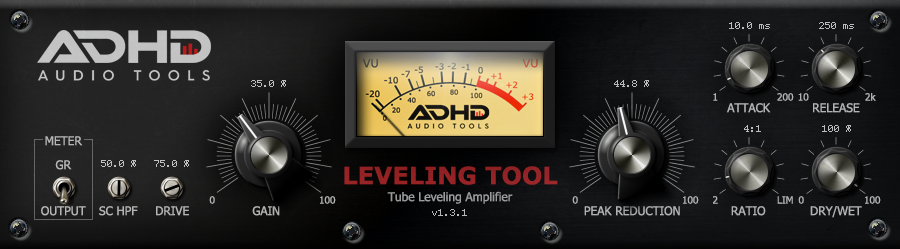
The purpose of a compressor can be found in the name. It is designed to “compress” audio in order to reduce the dynamics of an audio signal (dynamics refer to the variation between loud and quiet parts of an audio signal). A threshold (user set limit) is set and any audio above this threshold will be compressed. Compression happens based on a set ratio. For example, a 4:1 ratio means that for every 4db above the threshold, the signal will be reduced by 1db, whereas a 1:1 ratio will reduce the signal 1db for every 1db over the threshold.
Because compressors reduce any audio above the set threshold, the audio signal will be lower than before the audio signal was compressed. To help with this reduction in volume, compressors include the ability to add make up gain (boost audio signal) after the audio signal has been compressed.
Compression works well to even out audio signals when a person is dynamic in the way they talk. Compressors can help prevent signal peaking (reaching max volume that can cause distortion) without being as harsh as limiters (discussed later). However, improper setup can “squish” the audio resulting in vocals or instruments that do not have a lot of dynamic range and sound flat.
Gates
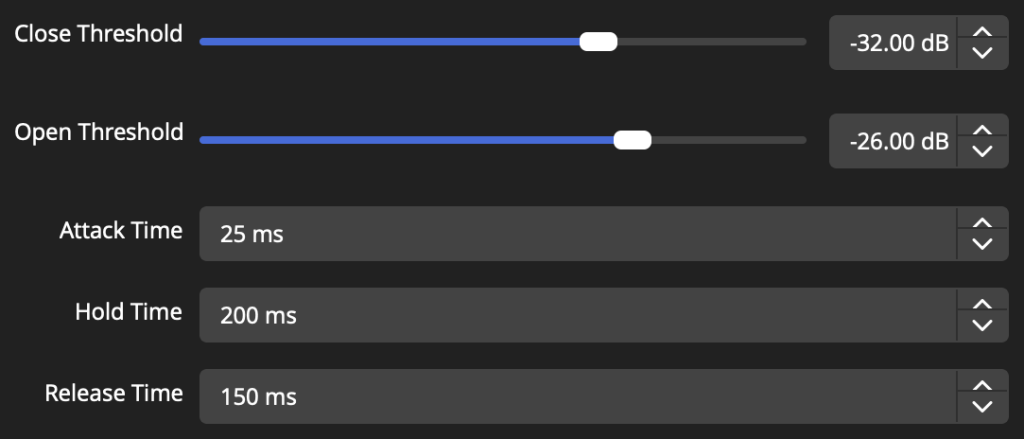
Gates are used to allow audio levels above a set threshold through, while any audio levels below this threshold will be cut off. Gates function well with certain kinds of instruments (e.g. kick drums), but can be harsh on vocals because they abruptly cut off audio. While most gate plugins offer settings to help avoid abrupt cutoffs in speech, dynamic vocals can easily trigger a gates function by speaking louder and then speaking softer. A properly set threshold can avoid this pitfall, however a lower threshold could allow through unwanted background noises when no one is speaking.
Expanders
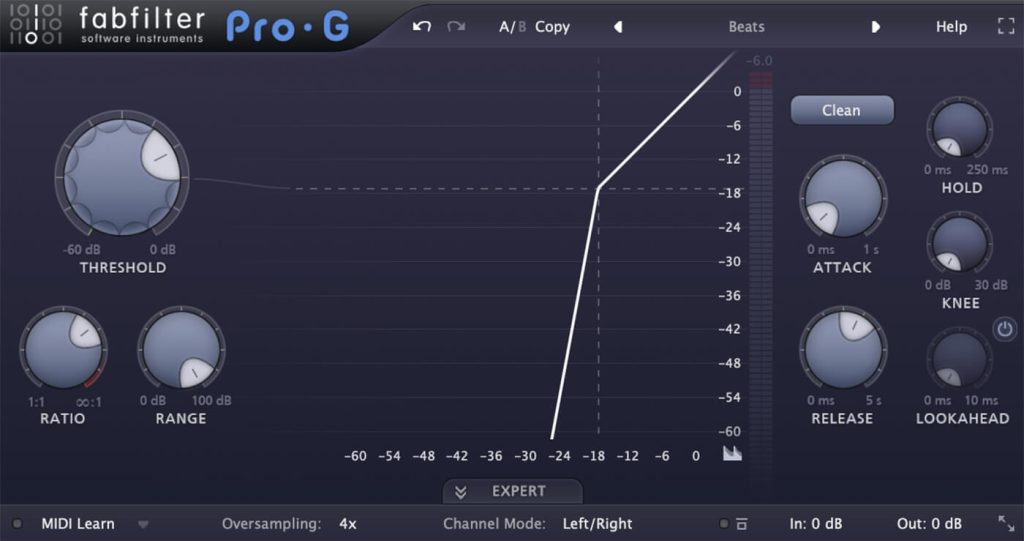
Expanders are similar to gates, but with some noticeable differences. First off, expanders still cut off audio below a designated threshold, while increasing the gain above the threshold. Because of this, expanders function opposite to how compressors work. Compressors reduce dynamics, while expanders increase dynamics.
The second major difference is in how it cuts off the audio that falls below the threshold. When audio falls below a threshold on a gate, it will close, cutting off all audio. When audio falls below a threshold on an expander, it gradually reduces the volume until it reaches zero. Because of this gradual reduction in volume, it is much less harsh on vocals.
Another important aspect about expanders is that they can be set to add zero gain above the threshold, thus making them function like a softer gate.
Equalizers

Equalizers (or more commonly referred to as “EQ”) target certain frequencies of an audio source. EQ can be used to remove too much high end or low end frequencies. It can also be used to cut or reduce specific frequencies that are problematic (such as the frequencies associated with S sounds).
EQs can come in many varieties, including dynamic EQs. Typical EQs work by cutting or boosting certain frequencies regardless of volume, but dynamic EQs begin cutting specific frequencies once that frequency hits a certain threshold. This allows a fuller sound at lower levels while taming frequencies when they increase in volume.
Limiters

Where compressors function by reducing audio by a certain ratio that exceeds a threshold, limiters function by preventing an audio signal from exceeding a set threshold. Limiters can be useful when you need to make sure an audio source never exceeds a certain level. Because of this, limiters can be harsher sounding when compared to a compressor, but they work well as a safeguard against signal peaking.
Noise Suppressors
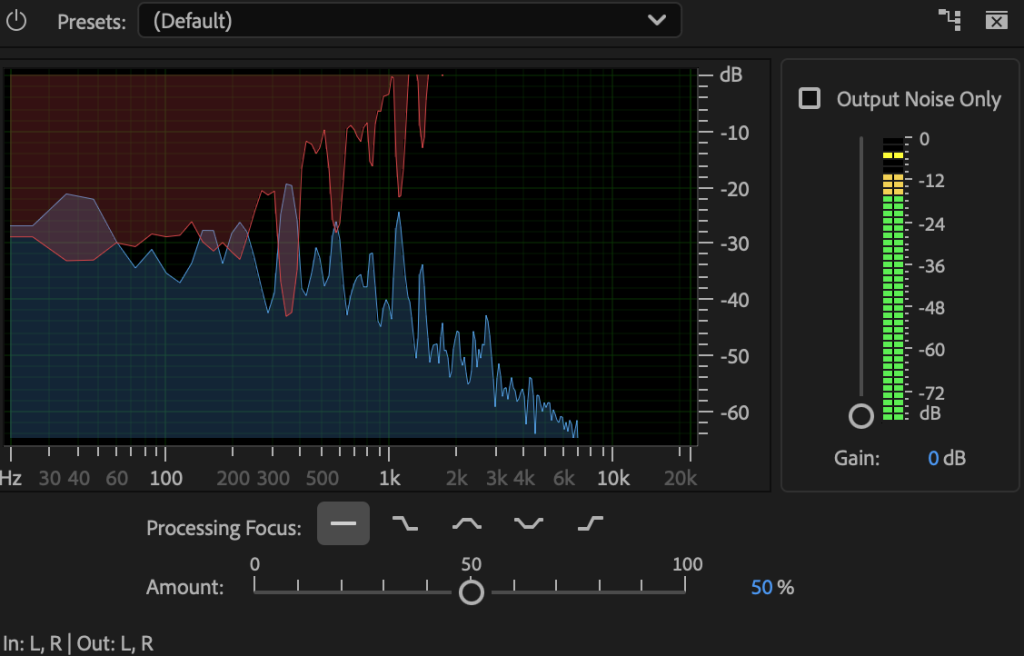
Noise suppressors work to “suppress” unwanted noises that occur in an audio signal. Noise suppressors can be used in live and recorded audio that contains a lot of background noise. While noise suppressors work well to remove background noise, too much noise suppression can affect the quality of voices or other sounds. This is due to the reduction of background noise that may contain frequencies that are also found in voices.
Conclusion
Plugins are useful tools that can help shape audio and create great sounding videos or livestreams. Understanding how each of these work is essential to using them properly. In part 2, the order in which to use these plugins will be discussed to achieve the best results.